google-site-verification=B5FAfcDpWPTJ-okzWbuAWoRkboNa0RFrXZvzG1RKnIs Project Atherion — Planetary Simulation Platform
Student-Led Research Initiative · New Delhi, 2026

Beyond Earth,
Beyond Limits

An open planetary simulation and settlement modelling platform — merging atmospheric physics, AI, and real-time visualisation to make humanity's multiplanetary future computable.

Apply to Join → Explore Platform
SIMULATION ENGINE: ACTIVE
PLANETARY TARGETS: Moon / Mars / Titan
BUILD PHASE: 01 — MVP
LOCATION: 28.6139° N, 77.2090° E
ATM PRESSURE: Pa
SURFACE TEMP: K
ALBEDO:
STATUS: NOMINAL
Scroll to explore

A new kind of
planetary intelligence.

Project Atherion is a student-led research startup building the infrastructure to simulate, design, and optimise human existence beyond Earth — for any possible planetary conditions. We combine aerospace engineering, artificial intelligence, and sustainability science into a single, unified platform.

Founded in New Delhi in 2026, we are replacing resource-heavy methods like Monte Carlo analyses and analogue site testing with physics-informed AI that is faster, deeper, and radically more accessible.

6
Core modules
4
Build phases
Planetary scenarios
2026
Founded

Six modules. One platform.
Every world imaginable.

01
Planetary Atmosphere Simulator
Physics-based solvers for fluid dynamics, thermodynamics, and cloud microphysics. ML-accelerated surrogates for rapid emulation across any planetary body.
PINNsNeural OperatorsGCM
02
Terrain & Surface Generator
Procedural terrain generation using noise functions, fractals, and erosion models. Integration with DEMs and remote sensing data from NASA, ESA, USGS.
ProceduralDEMHydrology
03
Settlement Planner & Generative Design
Reinforcement learning-based planners for adaptive settlement layout and resource management. Generative design algorithms balancing structural and sustainability constraints.
Safe RLGANsMulti-Objective
04
Sustainability Evaluator
ECLSS simulation covering air, water, waste, food, and energy systems. Bioregenerative modelling using NASA VHab, BioSim, and ESA MELiSSA frameworks.
ECLSSLife SupportESM
05
3D Visualisation Engine
Real-time rendering of planetary environments and settlements. VR/AR support via Unity3D and Unreal Engine. Browser-accessible via Three.js and WebGL.
Unity3DThree.jsVR/AR
06
Data Management & Integration
Connectors to NASA PDS, ESA PSA, USGS, and Microsoft Planetary Computer. FAIR-compliant data pipelines with versioning, lineage tracking, and synthetic augmentation.
NASA PDSFAIRMLOps

How we make it work.

A seven-stage data pipeline from raw planetary conditions to actionable simulation outputs — powered by hybrid physics-ML architecture.

01
Input Layer
Planetary Conditions Ingestion
Define the target world: mass, radius, orbital parameters, atmospheric composition, rotation rate, insolation. Works for Solar System bodies, exoplanets, or fully synthetic scenarios.
NASA PDSESA PSAZarr / HDF5
02
Physics Engine
Atmosphere Simulation
High-fidelity GCMs and CFD solvers model atmospheric evolution, radiative transfer, and climate. ML surrogates (PINNs, Neural Operators) provide 1000× faster emulation for parameter sweeps and uncertainty quantification.
OpenFOAMAthena++DeepXDENVIDIA Modulus
03
Terrain Layer
Surface & Terrain Modelling
Procedural terrain synthesis using fractal noise and erosion models, integrated with real DEM data. Surface-atmosphere coupling drives dynamic weathering, hydrology, and landform evolution.
CelestialSimGroundGrowingUSGS DEMs
04
AI Planning
Settlement Design Optimisation
Safe reinforcement learning agents propose and refine settlement layouts under hard physical constraints. Generative design explores the full design space — GANs, VAEs, and topology optimisation generate structurally and environmentally viable habitats.
PyTorchJAXRay RLlib
05
Evaluation
Sustainability & Habitability Assessment
Life support systems are modelled end-to-end using ECLSS and BLSS frameworks. Equivalent System Mass metrics quantify trade-offs. Agent-based and system-dynamics models capture emergent behaviours across resource cycles.
VHabBioSimMELiSSA
06
Visualisation
Real-Time 3D Rendering & Interaction
Results are rendered in real-time 3D, with interactive VR/AR environments for immersive exploration. Scientific overlays, scenario builders, and educational dashboards make complex data accessible to researchers, students, and policymakers alike.
Unity3DThree.jsD3.jsPlotly
07
Output
Reports, Metrics & Scenario Data
Structured outputs: mission-ready reports, design rationale documentation, sustainability metrics, and exportable scenario datasets — ready for agency, research, and industry partners.
FastAPIMLflowDVC

From MVP to multiplanetary.

Four phases. Measured, focused, and relentlessly execution-driven.

Current Phase
1
Minimum Viable Product
Duration: 3 months
  • Basic atmosphere & surface simulation
  • Procedural terrain generation
  • Simple settlement planner
  • 3D visualisation of results
  • Automated data ingestion pipeline
Phase Two
2
Integration & Testing
Duration: 6–9 months
  • Life support & sustainability simulation
  • Validation against planetary datasets
  • Enhanced 3D visualisation
  • User interaction layer
Phase Three
3
Scaling & Optimisation
Duration: 6–12 months
  • Modular, scalable architecture
  • Exoplanet & parameter sweep support
  • Cloud / HPC deployment
  • Advanced MLOps & monitoring
Phase Four
4
Deployment & Community
Duration: Ongoing
  • Public API & documentation
  • Educational & research interfaces
  • Open-source release
  • Community contributions

Built by people who mean it.

A serious research and engineering project, led by people who care deeply about making interplanetary habitation a computable, designable reality.

Dhruv Malhotra
Dhruv Malhotra
Founder & Project Lead
Driving the architecture of Project Atherion's simulation platform. Building the bridge between planetary science, AI/ML, and scalable engineering systems.
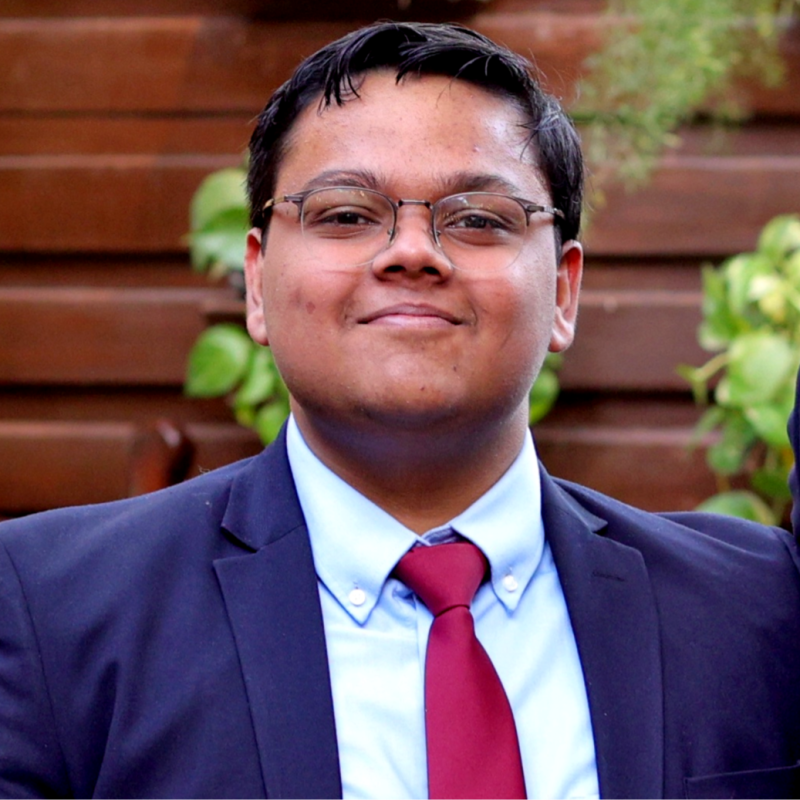
Shesh Shiromani
Shesh Shiromani
Director of Research & Development
Leading research and development efforts on the platform. Focused on atmospheric simulation, physics-informed ML, and the scientific rigour that underpins every module.
RF
Rayyan Fawad
Head of Cybersecurity, IT & Management Operations
Securing the platform's infrastructure and operations. Leads cybersecurity protocols, IT support systems, and cross-team coordination to keep Atherion running reliably and safely.
OPEN ROLES
Physics & Mathematics
Fluid dynamics, thermodynamics, planetary science, numerical methods.
AI / ML & Software Development
PINNs, neural operators, RL, scientific computing, software engineering.
Scientific Computing & Simulation
CFD, GCMs, HPC workflows, parallel computing, solver development.
Graphics & 3D Visualisation
Unity3D, Unreal Engine, Three.js, WebGL, procedural generation.
Research & Academia
Scientific research, academic partnerships, paper writing, and knowledge dissemination.
Outreach, Operations & Strategy
Community building, social media, partnerships, business development.

Ready to build
worlds beyond Earth?

We're assembling a team of driven researchers, engineers, and creators who want to work on one of the most ambitious student-led space platforms ever attempted.

Apply Now →

Application deadline: 30th May 2026, 11:59 PM IST

Questions?

Reach out directly to the team leads —